Containing containers...

When my Mom was still living in her home of 50 years, we’d have occasional “tiffs”. One that came up often was about the closet full of Tupperware and plastic containers. Everywhere I looked there was “stuff” and I knew that one day soon it would all have to go. I had the idea that it would be good if we could begin to work on decluttering but that idea was met with resistance in animated discussions.

My mom had run Tupperware parties in the 1960s, and added to those leftovers were many other plastic containers. My father had died. My mom was no longer cooking or leaving the house, so there was no need for her to have containers for sharing food with someone else. As far as I was concerned the only legit plastic containers were those in her fridge containing heat and serve meals that my brother and I “delivered” weekly.

None of my rational arguments worked. Because we talked about the stuff so often, she knew what was in the container closet and I could not even sneak some of it out of the house. One day, at peak exasperation, I looked at the closet and estimated that it would take me less than fifteen minutes to put the contents in the garbage “when the time came” (sorry Mother Nature). I gave in.

We emptied her house in 2017. Some of the contents landed in my house, becoming my clutter. If that’s not bad enough, I’ve been pondering that I too seem to have a thing about containers – eek!

I did not personally experience The Great Depression, but was close to my grandparents who did. Their motto seemed to be - save, save, save. Before “baggies” my grandmother saved every bag from Wonder bread – she washed them and hung them on the clothesline to dry. Beer bottles were saved for storing homemade tomato sauce.

I definitely inherited the mindset of pondering whether or not a thing might “come in handy” one day. If the answer was yes or maybe, it became a keeper – even though “one day” often never came.

At least the mason jars were authentic – and I now have a motherlode of those – some being used, some waiting to be inherited by I don’t know who.

Manufacturers also primed us for collecting. I still have pink and pale blue towels that my grandmother collected from boxes of powdered laundry detergent, and at least one “mug” that had been purchased filled with Billy Bee honey. I doubt that Crown Royal Whiskey came up with the idea – but that purple bag held all my marbles – and may still be in my house somewhere.

empty glass mugs

I admit to “having a thing” about boxes. Until IKEA came along, it was not that easy to get storage boxes that are now everywhere. I’m pretty sure my love of boxes came from Captain Kangaroo. He would reach under his counter and pull out a shoe box that was filled with pencils, crayons, scissors, glue, tape – things you’d need for a wee craft activity. (Google Hasbro Captain Kangaroo TV Sho Box Activity Kit – I never knew it had been retailed.) I made my own craft box. And thus the “box thing” began. When older, I had a few nice pairs of shoes that I kept in their shoe boxes. I recall papering the shoe boxes to make them prettier in my organized closet.

Before continuing I’d like to say that unlike my mother I can part with my containers more easily – I think… When Son #2 was in NYC for almost a decade I often sent parcels and therefore saved boxes that would suit that purpose. I hung on to the collection of unused boxes a bit too long – I think they’re all gone now.

As for cookie tins… that’s another story. I recently read an article about how many people use Royal Dansk cookie tins for home sewing kits. I don’t think we ever bought those cookies. My cookie tin source has been President’s Choice. Those Belgian chocolate cookies have, over the years, come in various tins and I tend to save them because they “come in handy” once a year.

Because I go nutty at Xmas making too many cookies I will for a period of 6 weeks need about 15 tins. Each year I gift at least 5, though they tend to boomerang. Just last week, someone “kindly” returned a cookie tin. That collection of tins is begging to be purged.

cookie tin
gold, black and sliver cookie tins

Metal containers I “admired” also included Illy coffee cans – elegant and sturdy with a beautiful lid. I kept trying to think of what business one could start that would make use of those containers. They finally exited the house.

Plastic? Because I do share food a lot, I began to accumulate reusable plastic takeout containers. The rationale was that if it wasn’t a Rubbermaid no one would feel pressure to return the container. I have to say that since the pandemic, many restos adopted very nice takeout containers. I have a lot, but could part with them anytime – whew, maybe I’m not becoming my mother after all.

Except for the jars… Did I inherit a penchant for jars? My Dad collected Miracle Whip jars in order to make his revolving odds and ends storage gadget - captured for posterity in this video created by my nephew and narrated by my brother.

I never intentionally collected glass jars, but for a while we bought Grolsch beer with that funky flip-top – how can you throw that away? For years I didn’t – until I recently gave them a thorough cleaning and gifted them to someone who uses them for maple syrup.

Glass is easy to discard in the blue box with some confidence it will be recycled, but some seem too lovely for that. I used to be hooked on the Bon Maman jars – and from what I have read online it seems I’m not the only one. Dalmatia fig spread jars were nice enough to keep, but I finally got over them

What I have not been able to toss into the garbage are my Maison Riveria “petit pots” - that contained delicious yogurt.
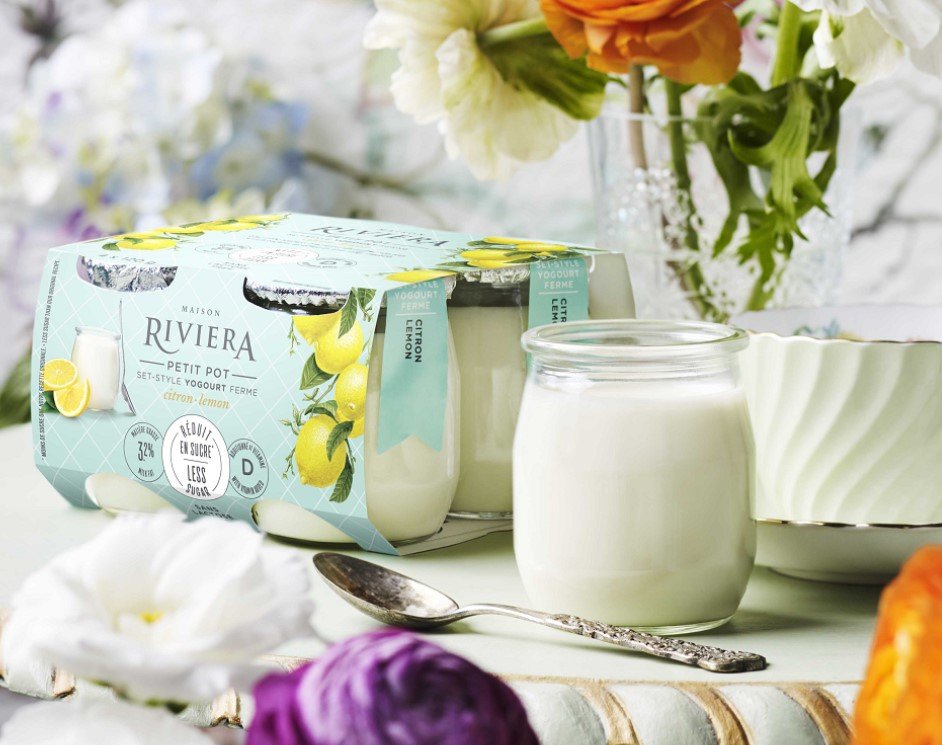
yogurt and small glass jar

I’d not before read the pitch on their website – though it does seem to capture some of the sentiments the adorable wee jars trigger. “…inspired by Old World refinement. The concept of a glass “petit pot,” having finally crossed the ocean, can now make its way onto our tables to the great delight of discerning gourmets… poetry in the form of a jar, a glass petit pot lets you see what’s in store before you enthusiastically break through the seal of quality. A lid you carefully pull open, slowly revealing the treasure that awaits you within. A little spoon you sink in and clink against the glass. Everything about the Petit Pot Collection appeals to the senses and enriches the taste experience.”

The more I ate their yogurt the more the collection grew. In the end, I found it to be easier to stop eating their yogurt than to trash the wee jars. A bit of a marketing flaw, I’d say. A couple sit on my desk holding pens and paperclips. I bought matching lids from the company (12 for $3) and finally stored the rest way on top of my kitchen cupboards.

Then one day I got hooked on ordering food from PORTA. They have four delicious desserts that come (frozen) in the same petit pots. Oh no!! My unintended collection began to grow again.

But then I was inspired. Their panna cotta was lovely – and I had a recipe for that. I began to make it and fill the petit pots – and even freeze them. Check out the recipe here. Maybe one day I will surprise you with some – as long as you promise not to return the jar!

panna cotta and raspberry in small jar

Blog Birthday #7

Here we go – another year when writing a weekly food column for a newspaper has interfered with posting stories on my personal blog. At least in 2020, I did three Distancing Diaries – and I have found these to be interesting reads to return to – to be reminded about what headspace I and others were in. One day I might wish I’d kept up the distancing diaries. Perhaps they’d help me understand the tidal wave of subtle changes affecting life and relationships.

Back to my blog…

For sure when I made my first post on February 7, 2015 I never imagined that it would lead to weekly food writing - a task that comes with pros and cons, ups and downs. It brings to mind a golf cap I got for my Dad once. It said “I hate golf, I hate golf, Nice shot! I love golf”. Warm fuzzy feedback, a great interview and even interesting research are the “pros” and the “ups”. Oh! and eating good food most of the time!

As for “blog neglect”, I take some comfort from the fact that I managed to get five recipes added in 2021. I seem to be unconsciously prioritizing – adding family recipes that the clan will not be likely to find elsewhere.

For the second year, the KB kitchen was not a sausage-making factory with friends on Family Day. But Mr. KB and I took the time to figure out the Suller/Safranyos recipe for Hungarian Hurka (liver sausage). It was fun and they were delicious! We also perfected our schnitzel-making technique – though I haven’t added that recipe (with the secret) to the blog yet. Also mastered making the family soup noodles called Csiga (not on the blog yet…).

liver sausage with potatoes and pickles
schnitzel

I recently read an article about digital decluttering which puts me in mind of the need for physical decluttering around here. I did begin one task that combined the digital and physical. A day will come when I will shut down my blog. A huge issue with that is that all the recipes I have added (178 so far) are sitting on a server that I do not own. I write directly on the platform which does not automatically give me digital copies of the recipes. Little by little, I have been downloading/saving the recipe html files and printing out each recipe. For the hard copies, I had to buy ring binders and have been stapling and hole-punching each. Then I sit with my ring binder - clicking it open and closed while I add the recipes sorted with alphabetical dividers.

What a crazy retro activity!

Some bloggers use their annual posts to make predictions. This year, I’m using mine to look back at some of the most interesting food experiences of 2021.

  • discovered a really good Hungarian paprika. (I do not recommend the “Pride of Szeged” brand sold in most stores.) Visit this link to learn more.

  • fell in love with Honey Cheese from Black River in Prince Edward County

  • had a peculiar obsession with Iced Tea this summer – lots of Arizona Green Tea

  • discovered Scout Seafood products - especially PEI mussels in smoked paprika and fennel tomato sauce

  • repeatedly enjoyed freshly picked asparagus from Thwaites Farm

  • Firsts – that will be (or have already been) followed by seconds – Halifax Donair, Easterbrooks 12-inch hot dog, Soma chocolate Advent calendar for grownups, Filipino cuisine, Hakka cuisine, Pan-African cuisine and Zero Proof drinks. Went to the Hamilton Night Market (actually the second time) but this year the organizer acted as a personal guide - so interesting and yummy.

  • Lasts - food “discoveries” that were “ok” but I’m in no hurry for seconds – Korean rice dogs, hot chocolate bombs, smash cakes and “rabbit wings”.

Advocaat drink and cocktail
marshmallow with chocolate and coconut
  • Nostalgia - finally made a full English breakfast at home in memory of the breakfasts we had travelling - the first time was in Torquay; bought some Advocaat in order to recreate the “snowball” drink and found a place to buy Tunnocks marshmallow Snowballs (Tea Cakes are also good!). Maybe we’re watching a bit too much Brit TV - haha.

Despite the pandemic, 2021 had periods where outdoor dining permitted some great meals – including two fancy pants meals that were linked to milestone birthdays and a wedding anniversary. Let me know if you want resto tips.

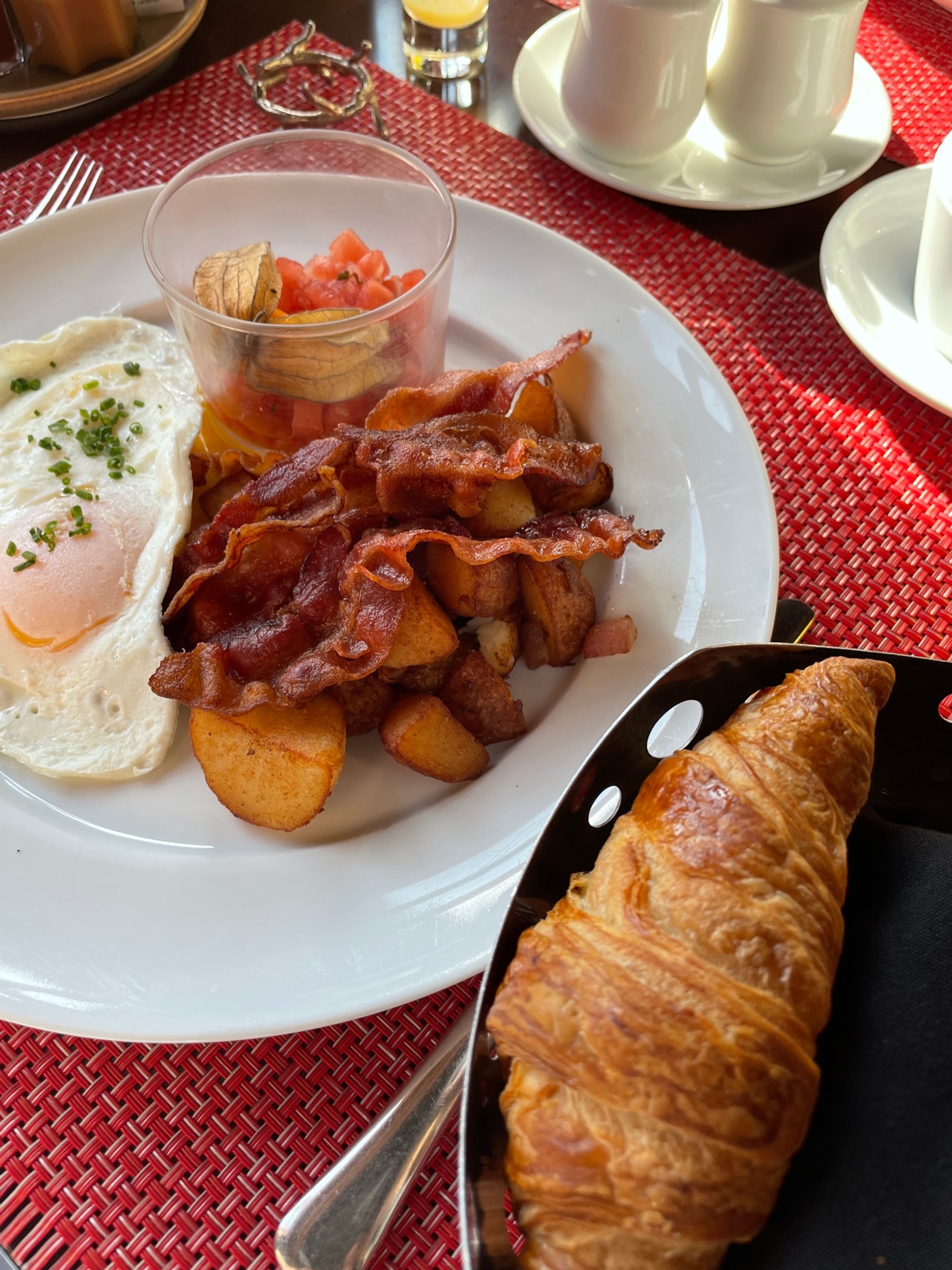
Who knows what triggers cravings? Right now I am fondly remembering lunch at Hippos on Lake Erie and breakfasts at the Auberge Saint-Antoine in Quebec City.

breakfast of eggs, bacon and croissant
fish and chips meal

I could write more, but I doubt that anyone needs convincing that the highlights of my life involve food. Here’s to another year of food experiences and stories - and, with luck, some travel!

quebec city

It's in the box!

IMG_3757 Edited.jpg

For some time now I have wanted to do a story on Meal Kits (as in cook a meal, not heat ‘n serve). An impediment was the need to subscribe to a service - or more than one if I wanted to do a comparison. I only knew one food blogger mom who used them for her family of four, but now I know a young bachelor using them and I’ve gone down the rabbit hole learning about this trend.

Prior to the pandemic, there were signs that this trend was floundering, but now I'm betting that not a week goes by when you have not received a promo "gift card" offering you some free food if you subscribe to one of the many services. The first time I came across a meal kit service was via ads for Blue Apron - still mainly in the USA. In Canada, the big names seem to be Hello Fresh, Chef's Plate and Good Food.

The original marketing pitch seemed to focus on saving time. Save time shopping for ingredients, prepping ingredients and cooking a meal after work. “What will I make for dinner?” has always been the albatross around the neck of most working mothers.

But a new market has emerged - one-person households.

“In the US, the share of adults who live alone nearly doubled over the last 50 years. This is not only happening in the US: single-person households have become increasingly common in many countries across the world, from Angola to Japan… the trend of rising single-person households extends across all world regions. There are large differences between countries – from more than 40% in northern European countries to 1% in low-income Asian countries.” [Source]

And in Canada “The number of persons living alone in Canada more than doubled over the last 35 years, from 1.7 million in 1981 to 4.0 million in 2016… Single-person households are now the most common household type in Canada – the first time in recorded Canadian history this has been the case. Previously, from 1867 to the time of the 2016 census, Canada’s most common household type had been one filled with a family.” [Source]

One-person households fit into various profiles - and include seniors - but you can also layer on young urban professionals, potentially living in “cozy” condos with mini appliances, minimal storage and no big freezer in the basement.

For them, meal kits may have some advantages. Let’s take a closer look.

IMG_3760 Edited2.jpg
IMG_3761 Edited.jpg

The young urban professional (male or female) may have spent time in kitchens and next to people cooking, but may not have ever made an entire meal from scratch. Even if you give them recipes for one (or two) they may be lacking certain basic pantry items (or the storage space for them). So how does a meal kit help?

Ingredients. These are provided in the exact quantity required for a meal/recipe.

Cost and Storage. Meal kit subscription costs vary and will be detailed shortly, but imagine a recipe that calls for hoisin, soy sauce and sweet chilli sauce. I have each of those in my normal-sized fridge as I write. If you didn’t have them you’d have to buy all three and you’d have three (mostly full) bottles to store in your compact fridge. If you are trying to socially isolate just now you’d have to go out to purchase these - although you could use an online grocer. My own spice collection would also take up a chunk of valuable cupboard space in a small apartment - not to mention the cost of purchasing them.

Waste. Yes, another topic that is complex, but as far as food and supplies there is no/minimal waste. The recipe calls for parsley? The kit provides exactly what you need and you won’t have to toss out leftover wilted parsley weeks later. Food waste can put my stomach into knots - mainly because I waste a bit more than I’d like to. I know there are ways of storing that parsley in my fridge - or even chopping it and freezing it in cubes. Do I do this all the time? (red face - no.) At least I’m not alone - or maybe that’s precisely the problem. The latest UN Food Waste Report was just released.

“63% of the food Canadians throw away could have been eaten. For the average Canadian household that amounts to 140 kilograms of wasted food per year – at a cost of more than $1,100 per year! For Canada as a whole, that amounts to almost 2.2 million tonnes of edible food wasted each year, costing Canadians in excess of $17 billion! All types of food are wasted, but in Canada the most prominently wasted foods by weight are: Vegetables: 30%, Fruit: 15%, Leftovers: 13%, Bread and Bakery: 9%, Dairy and Eggs: 7%.” {Source]

Waste/Packaging. There is no denying that by the time every ingredient of the food kit is laid out in a nice mise en place there’s packaging left over. Meal kit services are using recyclable boxes and embracing biodegradable packaging and reusable containers and ice packs. Mind you, so much of what we buy even for a family comes in packaging - it’s a problem. (Add on to that the Amazon boxes from everyone’s COVID purchases. Crikey…)

Convinced that a meal kit service may be just what they need, the urban single has to sort through the options - and there are moments when it feels like one needs a graduate degree to figure it all out. Here are some basics.

Subscription. For the big-name services you don’t get to order one meal for tomorrow - then thank you very much. You must subscribe - but check the flexibility. Some let you skip a week or more, and quit with no hassle. Did you use that enticing “free” start-up card? $100 free? Turns out that is usually pro-rated over a period of weeks so you don’t get to eat $100 worth of free food and then quit.

Subscription choices. For many services, “meals for two” is the smallest unit (no meals for one) and you usually have to order 3 meals per week at a minimum. (What you order is typically delivered only once per week.) So if you are single, you cook three times a week - and with leftovers eat the same meal twice. Subscribers are advised to have basic staples on hand such as oil, butter, salt, pepper.

Quality and Taste and Nutrients. Hunt around for reviews on the quality of ingredients and the taste of the food. Most services get good ratings on quality. “Taste” will be determined by the quality of the recipes. Nutrients are not always listed, but typical meals will include protein, a carb and a vegetable.

Variety and Creativity. Faced with choices when making meal selections, it’s ideal if there is some variety - not only weekly but over time. Are there ever options for BBQ or one-pot, or sheet-pan meals? Do options cover a range of world cuisines? Over a year, seasonal and special event meals may be offered. Whereas one service began to make breakfast smoothies available, on the whole, meal options do not include classic breakfast foods.

"Hello Fresh has some of the best menu options when it comes to variety and flexibility. Their dishes are inspired by cuisines around the world, such as Greek, Korean, Russian, Cuban, African, American, and much more. Plus, they have the highest number of meal options per week… Hello Fresh is currently the only meal kit company in Canada that offers Beyond Meat products for their veggie meals, like the bibimbap rice bowl and spicy sesame sauce with Beyond Meat, zucchini, and carrots." [Source]

Chinese Style Beef Bowl

Chinese Style Beef Bowl

Dietary Preferences. When it comes to dietary preferences, vegetarian is usually available. Some services will also indicate when options comply with other specialty diets/preferences - low carb, gluten-free, dairy-free, keto, paleo, halal, and kosher.

Serving sizes. Unless a service specifies that portions are generous this may be hard to judge until experienced.

Time and Complexity. Most services assume that the consumer is not an experienced cook. Illustrated instructions are provided by all and recipes usually indicate the level of difficulty/complexity as well as time (ranging from 15-20 minutes up to 30-45). I’ve stumbled across some reviews that grumble about the number of dishes used and clean-up - mind you that’s what I call normal unless one is doing a one-pot or sheet-pan meal.

Cost. Ah yes, the cost. Some websites - even review websites - seem to prefer listing the cost per serving, but what you really want to know is the weekly cost. When a promo discount is applied to the first month the weekly cost is obscured. For one person ordering 3 two-person meals per week, the cost per week may range from $60-70. A hidden fee may be a delivery charge. This may still be less than a single urbanite would spend buying fast food or takeouts from local restaurants - and the food may be more healthy.

Meal kits reduce the stress of meal planning and shopping and introduce people to bliss in the kitchen.

Kid appeal. As a postscript, it’s noteworthy that kids often find these kits appealing. My blogger friend says that on a typical day she cannot entice her kids away from their screens into the kitchen. But when the meal kit arrives it’s as if it’s Xmas and they join in, unpacking the box, setting up the ingredients and even helping with the cooking. Go figure!

Another postscript. Especially since and because of COVID many local restaurants now offer meal kits - no subscription. The most exciting one I encountered recently is Nannaa Foods. For each recipe, they even made easy-to-follow instructional videos. Their Pantry Boosters are also exciting. You can purchase many of the wonderful ingredients they use – cardamom tea leaves, barberries and sumac to mention only a few – and you know you want some Nannaa spice mix. I can’t wait to try making Tachin.

Blog Birthday #6

A year ago I noted that I only posted once in all of 2019! I also apologized that my blog birthday post was doing double duty as a belated New Year’s post.

So much for the Happy 2020 wishes…

2020-IMG_1992.jpg

Thanks(?) to COVID-19, I did more blog posts in the last year – several “Distancing Diaries” until it became so tedious that June was my last Diary. Who was to know that seven months later we’d still be in the throes of the pandemic journey?

When it comes to food blogging, as I have said before, the resto review gig has hijacked my time/writing. I still have many family recipes - and stories - to share before it’s my turn to exit.

Stories enact a form of mutual hospitality. What is story if not an enticement to stay? You’re invited in.” (Be My Guest by Priya Basil)

This birthday story invites you in, hoping you’ll stay awhile to read about life, death, “stuff” and hospitality.

After than June Diary, the next main event in life was the death of my mother in August, followed a few weeks later by that of my mother-in-law (MIL) – neither from COVID - and the ensuing emptying of a condo filled with almost 50 years of “stuff”.

The bulk of the work was done by Mr. KB and his brother, and while it wasn’t exactly the plan, working hours every day, the place was emptied in about a month. With my Mother’s house – and she was still alive but in LTC - it took 4 months. I couldn’t help noticing the impact of time on this process. For me, the main decisions – keep, donate, trash – were tough at first but over time ruthlessness set-in. Paradoxically, that went hand in hand with decision fatigue such that some things came to my house for postponed “sentencing”. That was 2017 and I can’t report a lot of progress.

With my MIL’s place, sorting through things only weeks into grieving made decisions more difficult and perhaps more things were kept, finding their way to our ever-crowded house.

And yet… many things were in fact donated or discarded. When reflecting on the number of things that ended up in the garbage, I feel like I should be apologizing to Mother Earth.

Our experience begged the question “Has society reached “peak stuff?” The day before the move of big furniture, we learned that the usual suspects re furniture donations were not accepting furniture. Not because of COVID. Simply because they had too much stuff, nobody was taking it away and they had no more space. Technically, for everything being given away there must surely be one person on the planet who would need or want it, but connecting with them is a challenge. In the end, some things ended up at the dump and seeing that pile of refuse was unforgettable.

That’s not all from us - but still a tragic sight…

That’s not all from us - but still a tragic sight…

We’re all under Emergency Lockdown now, but whenever things ease up I hope to continue thoughtful disposal activities. Will have to revisit ideas from “The Gentle Art of Swedish Death Cleaning” by Margareta Magnusson.

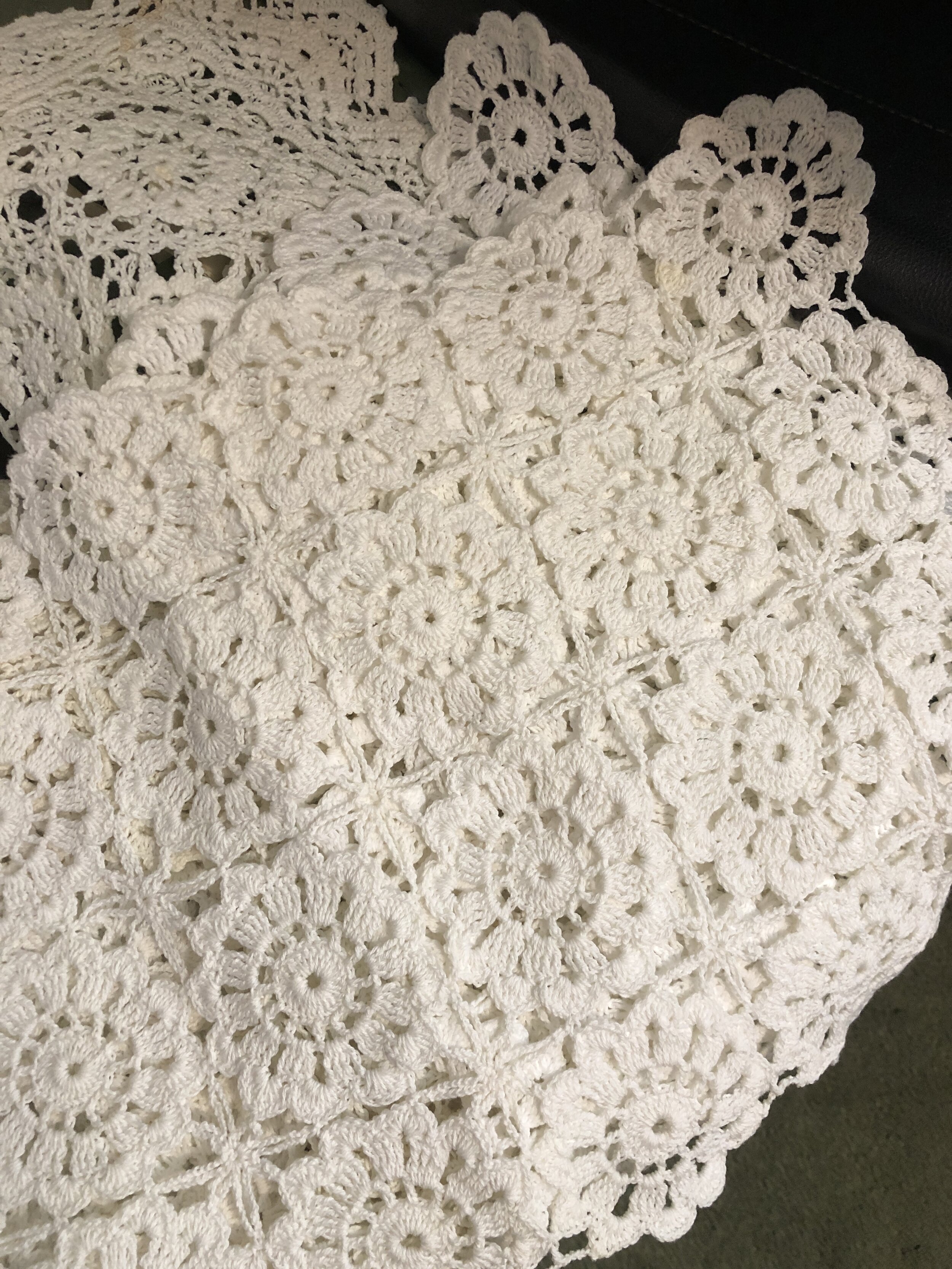
One category of things that is hard to let go of are the “crafts”. My mother had great talent in various things such as knitting and fine crocheting. These are treasures.

crochet-IMG_3408.JPG

But she once signed up for a “pottery” workshop. Not the kind where you throw pottery on a wheel, but where you glaze ready-made items that get fired, and you return a week later to apply a decal. They do not “bring joy” and I have no use or storage space for them. I cannot donate them because her name is carved into the bottom.

I’m taking some comfort from the fact that my “crafts” are mainly writing and cooking so there won’t be much to dispose of other than a hard drive and crumbs.

Writing in the rec room. Mom gone… house gone… university essays finally discarded. But KB Son#2 has the typewriter!

Writing in the rec room. Mom gone… house gone… university essays finally discarded. But KB Son#2 has the typewriter!

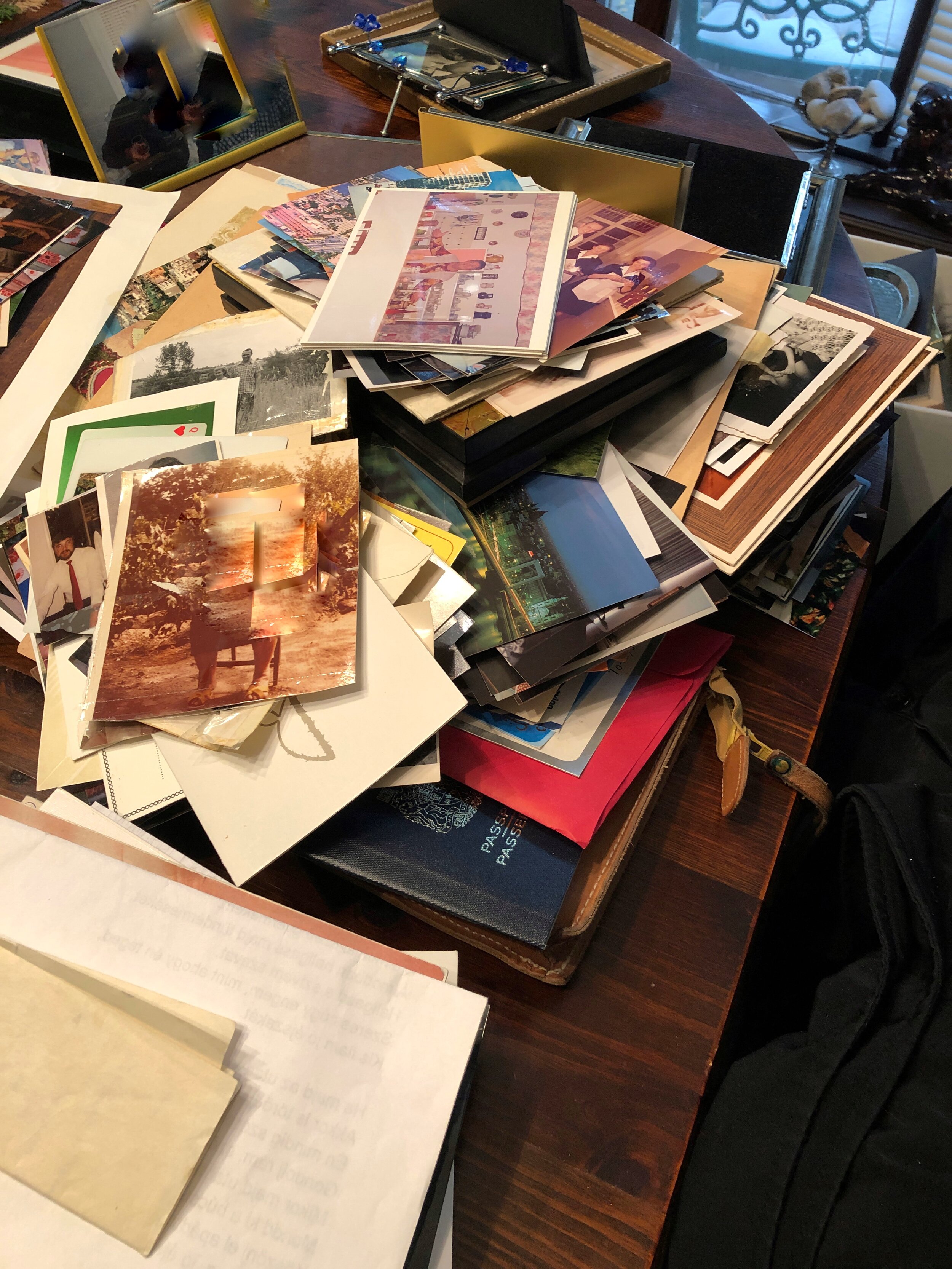
Photos are also hard to dispose of and one is easily overwhelmed by the complexity of sorting through prints. My own kids will be left with a mountain of photos – prints and digital. Digitals have the advantage of not taking up space. But will they ever look at the digital library? Probably not - perhaps missing a tangible act of grieving. Even if a photo is only touched for seconds, it triggers a journey down memory lane and that can’t be all bad.

photos-Snapseed.jpg

For several family funerals, I have taken on the task of making the photo slide show. (I find the process cathartic.) My mother’s photo story had such an impact. It reminded me that she was not always who she has (had) been lately. Embarrassing that I even needed reminding. Younger, slim, fashionable, in talent shows and so on. Pathetic and shameful that it took death for me to grasp and appreciate the arc and scope of her life.

cool-mom(1).jpg

Back to food blogging… last year I predicted 2020 would be my “bread” year. Not so for me though sourdough was a pandemic passion project for many.

Social isolation has been the dominant theme of the year. Since writing is a solitary activity, I may have been somewhat insulated from its effects, but I miss “hospitality” - cooking for company.

Maybe food really is the simplest way for people anywhere to share with each other… food is a force - and when shared its power may be amplified.” (Priya Basil)

Here’s hoping I see some of you at my table in 2021! End of story.

P.S. I did manage to add a new recipe in 2021 - Hungarian Chestnut Purée (Gesztenyepüré). Enjoy!